
What is Asset-Based Lending?
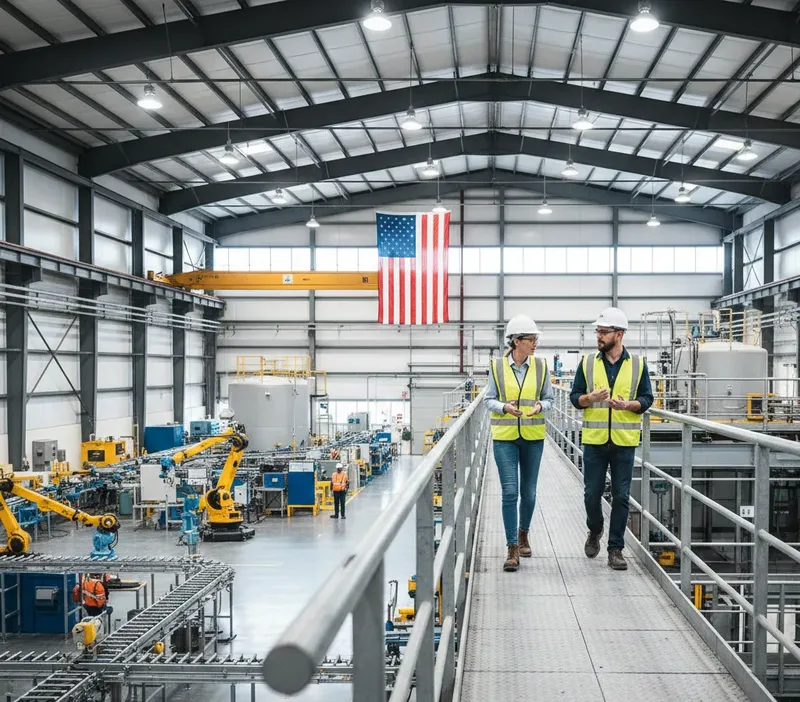
Asset-Based Lending (ABL) is a revolving credit line, typically $250K to $25M priced at Prime + 1–5%, secured by a combination of accounts receivable (70%–90% advance), inventory (50%–75% advance), equipment, and sometimes real estate. As of 2026, ABL is the standard replacement for a maxed-out bank line when a company has hard assets but doesn't fit a traditional credit box. Most bank ABL desks start at $3–5M minimums, which is why deals below that size usually need an advisor with multiple lender relationships.
How It Works
Asset-based lending, or ABL, is a revolving credit line backed by the company's hard assets, typically unpaid invoices and inventory, sometimes equipment and real estate. It is the structure most businesses move into when they outgrow their bank line but still have real collateral to borrow against.
As of 2026, most ABL deals run $3M to $25M, priced at Prime plus 1–5%. Lenders advance roughly 70–90% on unpaid invoices and 50–75% on inventory underneath. You report your eligible collateral on a regular schedule, usually weekly or monthly, and the lender raises or lowers your available credit accordingly. Customer payments flow into a separate bank account in your name, paying the line down automatically as new invoices come in.
ABL and invoice factoring are close cousins. Both create a revolving line collateralized by unpaid invoices. The difference is that factoring is the sale of an asset and stays off the balance sheet, while ABL is true debt with formal borrowing reports. For larger operators with clean financials, ABL usually wins on cost and presentation. For smaller deals or distressed credits, factoring is often the better tool.
ABL is the right structure for funding growth that has outpaced a bank, supporting an acquisition, consolidating expensive debt into a single line, or stabilizing a manufacturer with a long production cycle that needs to borrow against work-in-progress and finished inventory.
Setup takes six to eight weeks, with a field examination and legal documentation. We often bridge the first step with a faster working capital loan, then move into ABL once the underwriting is complete. The bridge buys time, and ABL is the permanent structure the business is moving into.
Quick Facts
| Facility / Loan Size | Facility sizes typically $250K to $25M; most placements are $3M and up |
|---|---|
| Funding Timeline | Setup timeline: 6 to 8 weeks (field exam, audit, legal) |
| Best For |
|
Key Features & Benefits
Facility sizes typically $250K to $25M; most placements are $3M and up
Pricing at Prime + 1%–5% as of 2026
70%–90% advance on eligible accounts receivable
50%–75% advance on eligible inventory layered underneath the AR
Equipment and commercial real estate can be added to expand availability
Revolving structure: pays down as customers remit, refills as new AR comes on
Weekly or monthly borrowing-based certificate required
Lockbox, DACA, or sweep account set up at closing
Setup timeline: 6 to 8 weeks (field exam, audit, legal)
Often paired with a fast revenue-based bridge to stabilize while ABL is assembled
Strong fit for B2B manufacturers, distributors, staffing firms, and government contractors
True debt on the balance sheet (unlike factoring, which is a sale of an asset)
Terms, costs and timelines
| Eligible receivables | 80%-85% |
|---|---|
| Finished goods inventory | 60%-75% of net orderly liquidation value |
| Raw materials | Generally ineligible. Lenders want finished goods |
| Work in process | Ineligible. Zero borrowing base credit |
| Machinery and equipment | 70%-80% of appraised liquidation value |
| Pricing (2026) | Prime + 1%-6%, depending on collateral mix and vertical |
| Reporting | Monthly borrowing-base certificate, weekly on tighter facilities |
| Serve fee | A success fee, earned only on closing. Agreed in writing before you sign anything. No retainers, no upfront costs |
Asset-Based Lending - Common Questions
Get answers to the most common questions about asset-based lending
See It In Action
Real companies using Asset-Based Lending to solve their capital challenges
Why AR Factoring Costs Range from 1% to 4%+ Per Month
Factoring rates vary wildly. Learn what drives the pricing—from industry risk to customer quality to your lender's cost of capital.
Jan 19, 2026
How Long Does Business Financing Really Take?
Business financing timelines vary wildly. Some deals close in days, others take months. Here's exactly what to expect at each stage.
Jan 24, 2026
How Invoice Factoring Actually Works
Invoice factoring explained: the triangle, the lockbox, what it costs in 2026, how it differs from an MCA, and what your customers see when payment is rerouted.
May 15, 2026
How It Compares
Side-by-side breakdowns of Asset-Based Lending against the structures it most often competes with
Invoice Factoring vs Asset-Based Lending
Invoice factoring and asset-based lending are close cousins. Both are revolving lines against AR with a lockbox. Here is how to choose, with real numbers.
Working Capital Loan vs Line of Credit
A working capital loan is a one-shot lump sum on a monthly payment. A line of credit revolves so you only pay for what you draw. Here is how to choose.
Equipment Financing vs Sale-Leaseback
Equipment financing funds a new purchase. A sale-leaseback extracts cash from gear you already own. Two products, two very different uses.
Other Funding Solutions
Working Capital Loans & Lines of Credit
A working capital loan is short-term, revenue-based financing of $100K to $10M+ that funds in 2 to 10 business days, priced at 1.25%–4% per month. As of 2026, it's the fastest way to cover payroll, inventory, or growth-driven cash gaps when a bank can't move quickly enough, and at the same speed as a merchant cash advance it costs roughly half as much because the payment is monthly rather than a daily extraction from sales.
Learn more about Working Capital Loans & Lines of Credit →Invoice Financing
Invoice factoring is the practice of selling unpaid B2B invoices to a factor for 75%–95% of face value within 24–48 hours, then receiving the balance (minus a 0.25%–1% fee per invoice) when the customer pays. As of 2026, pricing typically runs Prime + 1–6%, facility sizes range from $250K to $100MM, and the facility scales automatically with sales. Approval looks at your customers' credit rather than your tax return, which is why it works for growing companies whose financials don't yet tell the full story.
Learn more about Invoice Financing →Equipment Leasing
& Financing
Equipment leasing and financing covers $100K to $50MM+ of machinery, vehicles, or technology over 3–7 year terms, with advance rates of 70%–85% of liquidation value and pricing of Prime + 3–10%. As of 2026, financing the asset directly is almost always cheaper than drawing on a working-capital line for the same purchase. Sale-leaseback structures let you extract 50%–70% of the equity from equipment you already own without adding a new debt covenant.
Learn more about Equipment Leasing & Financing →